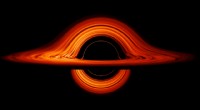
However, Jeans touches upon the evolution of stars, their energy sources, and their eventual demise. He describes how stars spend their lives fusing hydrogen into helium, eventually running out of fuel and collapsing under their own gravity. This process can lead to different end stages, such as white dwarfs, neutron stars, or black holes.
While the essay doesn't give specific size ranges for stars, it suggests that the sizes of stars are a factor in their lifespan and their eventual fate.
If you're interested in the size of stars, I recommend researching further. You can find information on the following:
* Stellar Classification: Stars are classified into different spectral types (O, B, A, F, G, K, M) based on their temperature and luminosity. Each type has a characteristic size range.
* Stellar Evolution: As stars evolve, they change in size and luminosity. For example, red giants are much larger than their main-sequence counterparts.
* Star Clusters: Studying star clusters can provide insights into the size distribution of stars within a particular age group.
Remember, the size of a star is not the only factor determining its lifespan and fate. Other crucial factors include its mass, chemical composition, and its surroundings.