Here's the breakdown:
* Red Giant: In about 5 billion years, the Sun will run out of hydrogen fuel in its core and start fusing helium. This will cause it to swell into a red giant, engulfing Mercury, Venus, and possibly Earth.
* Helium Flash: As the Sun's core shrinks and heats up, it will eventually reach a critical point where helium fusion ignites rapidly, leading to a helium flash. This is a short but intense burst of energy.
* Horizontal Branch: After the helium flash, the Sun will settle into a new equilibrium as a horizontal branch star, fusing helium into carbon and oxygen.
* Asymptotic Giant Branch: The Sun will then enter the asymptotic giant branch (AGB) phase, where it will expand again and become even brighter. It will also undergo a series of thermal pulses, during which it will briefly fuse heavier elements like carbon.
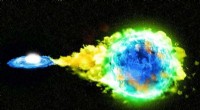
* Planetary Nebula: Eventually, the Sun will shed its outer layers, forming a glowing cloud of gas called a planetary nebula. This cloud will gradually dissipate over time, leaving behind a hot, dense core known as a white dwarf.
So, technically, the Sun won't "explode" in the way we might imagine. It will shed its outer layers and leave behind a white dwarf.