Home
Chemistry
Astronomy
Energy
Nature
Biology
Physics
Electronics
Science
>>
Science Discoveries
> >>
Astronomy
Black Holes: Understanding Stellar Remnants and Gravitational Collapse
When the leftovers of a supernova are so massive that they collapse to form a dense object whose gravity is strong enough that light cannot escape, it forms a
black hole
.
Cosmic Microwave Background Radiation (CMB): Explained
Why You'll Never See a Full Moon During the Day - Explained
Astronomy
Mars Weather Update: Cool Temperatures and Dust Devil Forecast
From Protoplanetary Discs to Rocky Planets: The Formation Process
Sentinel‑5P Secured Inside Rockot Fairing Ahead of Launch
Science Discoveries
French Particle Accelerator Reveals New Insights into Supernova Physics
New Study Highlights Health Advantages for Whites in Racialized White System
Reversible CO₂ Hydrogenation to Formic Acid: A Breakthrough Energy Storage System
Science Discoveries
Chemistry
Astronomy
Energy
Nature
Biology
Physics
Electronics
Geology
Solar Eclipse
Math
other
Nanotechnology
Astronomy
DESI Launches 5-Year Survey to Map Dark Energy Across the Cosmos
Radio Observations Confirm Ultra-Relativistic Jet Ejected by Neutron Star Merger
Supermoon: Closer but Not as Spectacular as Expected
Safeguarding Outer Space: Environmental Protection Beyond Earth
Robotic Telescope Spotlights Asteroid 2020 QG as Earth's Closest Known Flyby
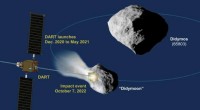
EU and US Join Forces on Asteroid Deflection Mission
|
Geology
|
Math
|
Solar Eclipse
Science Discoveries © www.scienceaq.com