Size and Mass:
* Sun: A yellow dwarf star, much larger and more massive than red dwarfs.
* Red Dwarf: The smallest and coolest type of star, significantly smaller and less massive than the Sun.
Temperature and Luminosity:
* Sun: Hot and luminous, with a surface temperature of around 5,500°C (9,932°F).
* Red Dwarf: Much cooler and dimmer than the Sun, with surface temperatures ranging from 2,400°C to 3,700°C (4,352°F to 6,692°F).
Lifespan:
* Sun: Has a lifespan of about 10 billion years.
* Red Dwarf: Have lifespans measured in trillions of years, significantly longer than the Sun's. This is due to their much slower rate of fusion.
Fuel Consumption:
* Sun: Burns hydrogen fuel at a rapid rate.
* Red Dwarf: Burn hydrogen fuel very slowly due to their lower temperatures and pressures.
Activity:
* Sun: Has a strong magnetic field and active surface, producing solar flares and coronal mass ejections.
* Red Dwarf: Often have weak magnetic fields and less active surfaces, leading to fewer flares and eruptions.
Habitability:
* Sun: Supports life on Earth, but the habitable zone is relatively narrow and subject to solar flares.
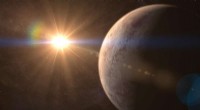
* Red Dwarf: Habitable zones are much closer to the star and more prone to tidal locking (one side always facing the star). The intense flares from some red dwarfs could also be detrimental to life.
Similarities:
* Both are stars: They are both massive balls of hot gas that generate energy through nuclear fusion.
* Both produce light and heat: They emit light and heat, albeit in different amounts due to their varying sizes and temperatures.
* Both are primarily composed of hydrogen and helium: These elements make up the majority of their mass.
In conclusion, while both the Sun and red dwarfs are stars, they are fundamentally different in their physical properties and characteristics. However, they share the commonality of being massive balls of gas that produce energy through nuclear fusion.