* Vast Distances: Stars are incredibly far away. Even the closest star, Proxima Centauri, is 4.24 light-years away. Light travels at an astonishing speed, but these distances are so immense that the light reaching us is significantly weakened by the time it gets here.
* Inverse Square Law: The intensity of light decreases with the square of the distance from the source. This means that if a star is twice as far away, its light will be four times fainter. The vast distances involved mean the light is spread out over a massive area.
* Atmospheric Absorption: Earth's atmosphere absorbs some of the light from stars, particularly in the blue and ultraviolet wavelengths. This further reduces the amount of light that reaches our eyes.
* Scattering and Reflection: Light can be scattered and reflected by particles in the atmosphere, further diminishing its intensity. This is especially true for shorter wavelengths of light.
* Our Eyes: Human eyes are not particularly sensitive to faint light, especially in the wavelengths emitted by most stars. We perceive a lot of the light from stars as red, which our eyes are less sensitive to.
It's also important to note:
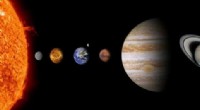
* Star Brightness: While stars seem faint, they are actually incredibly luminous objects. The Sun, our own star, is just an average-sized star, yet it is much brighter than the vast majority of stars in the Milky Way.
* Telescopes: Telescopes, especially large ones, can collect much more light than our eyes, allowing us to see much fainter objects in the universe.
In essence, while stars are intensely bright objects, the vast distances involved, atmospheric absorption, and our limited vision combine to make their light appear faint to us.