Formation Timeline:
* 4.56 billion years ago (bya): The solar nebula, a giant cloud of gas and dust, begins to collapse under its own gravity.
* 4.54 bya: The Sun forms at the center of the nebula.
* 4.54 to 4.0 bya: The remaining gas and dust in the disk around the Sun start to clump together due to gravity, forming planetesimals (small, rocky bodies).
* 4.0 to 3.8 bya: Planetesimals collide and accrete, forming the protoplanets.
* 3.8 bya to present: The planets continue to grow, with some experiencing major impacts and changes in their orbits.
Formation Process:
1. Gravitational Collapse: The solar nebula, composed mainly of hydrogen and helium, collapses under its own gravity.
2. Planetesimal Formation: As the nebula collapses, particles collide and stick together, forming small, dust-sized particles. These particles then clump together to form larger bodies called planetesimals, which can be a few kilometers across.
3. Protoplanet Formation: Planetesimals continue to collide and accrete, forming larger bodies called protoplanets. These protoplanets can be hundreds or even thousands of kilometers in diameter.
4. Planetary Formation: The protoplanets continue to grow through collisions and accretion, eventually forming the planets we see today. The final stages of planet formation can be quite chaotic, with large impacts and orbital adjustments occurring.
Key Points:
* Accretion: The process of planets forming through the gradual accumulation of smaller particles is called accretion.
* Differentiation: As protoplanets grow, their interiors heat up due to collisions and radioactive decay. This heat causes the heavier elements (like iron and nickel) to sink to the core, while lighter elements (like silicon and oxygen) rise to the surface. This process is called differentiation.
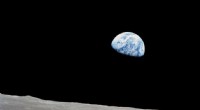
* Giant Impact Hypothesis: The formation of the Moon is thought to have been caused by a giant impact between a Mars-sized object and the early Earth.
Important Note: This is a simplified explanation of a very complex process. Scientists are still learning more about the formation of planets, and there are many different theories and models.