Physical Features:
* Size and Mass: Jupiter is a massive planet, boasting a diameter of 140,000 km, more than 11 times the diameter of Earth. Its mass is 318 times that of Earth, and it's more massive than all the other planets in our solar system combined.
* Composition: Jupiter is primarily composed of hydrogen and helium, similar to the Sun. This makes it a gas giant, with no solid surface.
* Internal Structure: Jupiter's interior is thought to consist of a dense core made of rock and ice, surrounded by a thick layer of metallic hydrogen. Above this lies a layer of liquid hydrogen and helium, and finally a thin outer layer of gaseous hydrogen and helium.
* Atmospheric Structure: Jupiter has a dynamic atmosphere, characterized by bands of clouds in different colors, ranging from white to red to brown. These bands are caused by powerful winds and atmospheric currents.
* Great Red Spot: The most famous feature of Jupiter is the Great Red Spot, a gigantic storm that has been raging for centuries. This anticyclonic storm is larger than Earth, with winds reaching speeds of 400 km/h.
Magnetic Field:
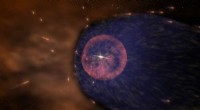
* Powerful Magnetic Field: Jupiter has the strongest magnetic field in the solar system, about 20,000 times stronger than Earth's. This field traps charged particles, creating a vast magnetosphere that extends far beyond the planet's atmosphere.
* Auroras: Jupiter's magnetic field creates spectacular auroras at its poles, similar to Earth's Northern Lights.
Moons:
* Numerous Moons: Jupiter has 79 known moons, more than any other planet in the solar system. The four largest moons, Io, Europa, Ganymede, and Callisto, are called the Galilean moons because they were discovered by Galileo Galilei.
* Volcanic Io: Io is the most volcanically active body in the solar system, with numerous volcanoes erupting molten sulfur and other materials.
* Icy Europa: Europa is thought to have a vast ocean of liquid water beneath its icy surface, making it a prime target in the search for extraterrestrial life.
Other Notable Features:
* Radio Emissions: Jupiter emits powerful radio waves, which are generated by its magnetic field and interactions with its moons.
* Rings: Jupiter has faint rings around it, made up of dust particles.
These are just some of the many special features that make Jupiter a truly remarkable and fascinating planet. It continues to be a target of intense scientific study, revealing new insights into its composition, atmosphere, and interactions with its moons.