1. Low Gravity: The Moon's gravity is much weaker than Earth's (about 1/6th). This means it has a much harder time holding onto any gases.
2. No Magnetic Field: Unlike Earth, the Moon has a very weak magnetic field. This lack of a magnetic field leaves the Moon vulnerable to the solar wind, a constant stream of charged particles from the Sun that can strip away any atmosphere.
3. Small Size and Mass: The Moon's small size and mass means it has a lower escape velocity. This is the minimum speed an object needs to escape the gravitational pull of a celestial body. Since the escape velocity is low, any gases present are more likely to be lost into space.
4. Early History: It's believed that the Moon may have had a very thin atmosphere in its early history. However, over billions of years, solar wind and micrometeoroid impacts gradually stripped away the atmosphere.
What's left?
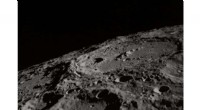
While the Moon doesn't have a substantial atmosphere like Earth, there is a very thin layer of gases called an exosphere. This exosphere is composed of elements like sodium, potassium, helium, and argon, but it's incredibly thin and doesn't provide any protection or contribute to weather.
In short: The Moon's lack of atmosphere is a result of its low gravity, weak magnetic field, and small size, all of which make it difficult to retain gases over long periods.