Key Features:
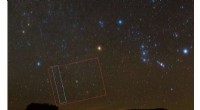
* Shape: Cygnus is easily recognizable for its distinctive cross shape, formed by its brightest stars.
* Brightest Star: Deneb, the brightest star in Cygnus, marks the tail of the swan. It's a white supergiant and one of the most luminous stars visible to the naked eye.
* Other Notable Stars: Albireo, at the head of the swan, is a beautiful double star, with a golden-yellow and blue component. Sadr, at the swan's breast, is a yellow supergiant.
* Notable Objects: Cygnus contains several notable deep-sky objects, including the North America Nebula (NGC 7000), the Veil Nebula (NGC 6960 and NGC 6992-5), and the Cygnus X-1 black hole.
Mythology:
In Greek mythology, Cygnus represents the swan into which Zeus transformed himself to seduce Leda, the wife of King Tyndareus. Leda laid two eggs, from which hatched the twins Castor and Pollux, and Helen of Troy.
Location and Visibility:
* Cygnus is located in the Milky Way, making it rich in stars and nebulae.
* It's visible in the Northern Hemisphere from late spring to early autumn.
* To find Cygnus, look for the constellation Lyra (the Lyre), which is located near it.
Other Interesting Facts:
* The constellation Cygnus is home to the largest known star in the Milky Way, NML Cygni.
* Cygnus is also the location of a number of variable stars, including Cepheid variables, which are used to measure distances in the universe.
Cygnus is a beautiful and fascinating constellation, offering a wealth of celestial treasures for stargazers to explore.