Here's a breakdown of some common astronomical phenomena:
Celestial Motions:
* Rotation: The spinning of a celestial body on its axis, causing day and night.
* Revolution: The orbiting of one celestial body around another, like Earth around the Sun.
* Precession: The slow wobble of a celestial body's axis of rotation.
* Nutation: A small, periodic wobble in a celestial body's axis of rotation.
* Tides: The rise and fall of sea levels caused by the gravitational pull of the Moon and Sun.
Light and Radiation:
* Electromagnetic Spectrum: The full range of light and radiation emitted by celestial objects, including visible light, infrared, ultraviolet, X-rays, and gamma rays.
* Spectral Lines: Unique patterns of light emitted or absorbed by specific elements, used to determine the composition and properties of celestial objects.
* Redshift and Blueshift: Shifts in the wavelengths of light due to the motion of the source relative to the observer, indicating whether an object is moving towards or away from us.
Cosmic Events:
* Supernovae: The explosive death of a star, releasing immense energy and light.
* Nebulae: Clouds of gas and dust in space, often associated with star formation.
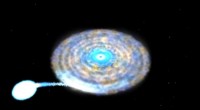
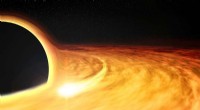
* Black Holes: Regions of spacetime with such strong gravity that nothing, not even light, can escape.
* Quasars: Extremely bright and distant objects powered by supermassive black holes at the centers of galaxies.
* Gamma-Ray Bursts: The most powerful explosions in the universe, believed to be caused by the collapse of massive stars or the merging of neutron stars.
* Cosmic Microwave Background Radiation: Faint radiation left over from the Big Bang, providing evidence for the origin and evolution of the universe.
Other Phenomena:
* Gravitational Waves: Ripples in spacetime caused by massive objects accelerating, detected by instruments like LIGO.
* Cosmic Rays: High-energy particles from space that can interact with Earth's atmosphere.
* Solar Flares: Sudden bursts of energy from the Sun's surface, potentially causing disturbances on Earth.
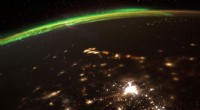
* Auroras: Colorful displays of light in the sky caused by charged particles from the Sun interacting with Earth's atmosphere.
Astronomers study these phenomena to understand the universe's structure, composition, origin, and evolution. By observing and analyzing them, we can gain valuable insights into the fundamental laws of physics and the nature of reality itself.