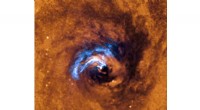
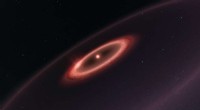
* Formation: Planets form in protoplanetary disks around young stars. The distribution of material in these disks, influenced by factors like stellar wind and magnetic fields, determines where and how planets form.
* Gravity: A planet's mass does influence its gravitational pull. However, while a massive planet will have a stronger gravitational influence, this doesn't directly determine its distance from the Sun.
* Orbital Dynamics: A planet's orbital path and distance are primarily governed by its orbital velocity and the gravitational pull of the Sun. The Sun's gravitational influence is stronger closer to it, but a planet's orbital velocity can counteract that pull, allowing it to maintain a stable orbit further away.
Examples:
* Jupiter: The most massive planet in our solar system is relatively far from the Sun.
* Mercury: This small, rocky planet is the closest to the Sun.
Key Takeaway: While a planet's mass influences its gravitational interactions, it doesn't directly determine its distance from the Sun. The factors that determine a planet's orbital path and distance are complex and involve the initial conditions of the solar system's formation and the ongoing interplay of gravitational forces.