How it works:
1. Light Collection: When light from a celestial object falls on the CCD chip, it creates electron-hole pairs in the silicon material.
2. Charge Storage: The electrons are trapped in potential wells created by electric fields on the chip. These wells act like tiny "buckets" that store the charge created by the light.
3. Charge Transfer: The charge is then shifted across the chip in a controlled manner, like a bucket brigade, until it reaches a readout amplifier.
4. Conversion to Signal: The amplifier converts the charge into a voltage, which is then digitized and displayed as an image.
Advantages of CCDs in Astronomy:
* High Sensitivity: CCDs are extremely sensitive to light, allowing astronomers to capture faint objects that are difficult to see with the human eye.
* Wide Dynamic Range: They can capture a wide range of light intensities, from very dim to very bright objects.
* Low Noise: CCDs produce very low noise levels, ensuring high image quality.
* Linear Response: The signal output is directly proportional to the amount of light received, making data analysis easier.
* Digital Output: CCDs provide digital images that can be easily processed and analyzed by computers.
Applications in Astronomy:
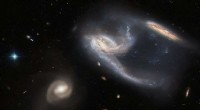
* Imaging: Capturing images of planets, stars, galaxies, and other celestial objects.
* Spectroscopy: Analyzing the spectral composition of light from celestial objects.
* Photometry: Measuring the brightness of stars and other celestial objects.
* Astrometry: Measuring the positions and motions of celestial objects.
* Exoplanet Detection: Detecting planets orbiting other stars.
Types of Astronomical CCDs:
* Full-Frame CCDs: Capture images across the entire sensor.
* Back-Illuminated CCDs: Light enters the sensor from the back side, improving sensitivity.
* EMCCDs (Electron Multiplying CCDs): Amplify the signal, increasing sensitivity.
Overall, CCDs have revolutionized astronomical research by providing astronomers with powerful tools to explore the universe.