* Visible light: The portion of the electromagnetic spectrum that our eyes can see. This is what we perceive as the color of stars.
* Infrared radiation: This is invisible to our eyes but is felt as heat.
* Ultraviolet radiation: This is a higher-energy form of radiation that can cause sunburns.
* X-rays: These are even higher-energy and can be harmful to living tissue.
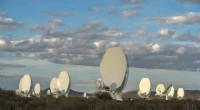
* Radio waves: These are the lowest-energy form of electromagnetic radiation.
Other forms of radiation emitted by stars:
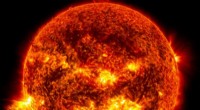
* Solar wind: This is a stream of charged particles (mainly protons and electrons) that flows outward from the Sun.
* Neutrinos: These are subatomic particles that interact very weakly with matter, so they pass through Earth almost undisturbed.
The specific types and intensities of radiation emitted by a star depend on its temperature, size, and composition.
Here's a breakdown of the radiation we experience from our own Sun:
* Visible light: About 40% of the Sun's radiation is in the visible range.
* Infrared radiation: About 50% of the Sun's radiation is infrared.
* Ultraviolet radiation: About 7% of the Sun's radiation is ultraviolet.
* X-rays: The Sun emits a small amount of X-rays.
* Radio waves: The Sun emits a very small amount of radio waves.
The Earth's atmosphere shields us from most of the Sun's harmful radiation, such as ultraviolet and X-rays, but some does reach the surface.