1. Transit Method:
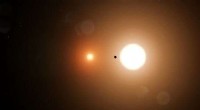
* Looks for: A slight dimming of a star's light as a planet passes in front of it.
* How it works: The planet blocks a tiny amount of starlight, creating a dip in the star's brightness. This dip is repeated periodically as the planet orbits the star.
* Strengths: Highly successful, can determine a planet's size and orbital period.
* Limitations: Requires the planet's orbit to be aligned with our line of sight, works best for large planets orbiting close to their star.
2. Radial Velocity Method (Doppler Spectroscopy):
* Looks for: A wobble in the star caused by the gravitational pull of an orbiting planet.
* How it works: A planet's gravity tugs on its star, causing the star to move slightly towards and away from us. This motion changes the star's light spectrum, creating a Doppler shift.
* Strengths: Can detect planets with large masses and short orbital periods.
* Limitations: Difficult to detect small planets or those with long orbital periods.
3. Direct Imaging:
* Looks for: Directly observing the faint light emitted by an exoplanet.
* How it works: Uses sophisticated telescopes and image processing to block out the glare of the star and capture the planet's light.
* Strengths: Can provide information about the planet's atmosphere, temperature, and composition.
* Limitations: Extremely challenging due to the faintness of exoplanets compared to their stars, works best for large planets far from their stars.
4. Gravitational Microlensing:
* Looks for: The bending of light from a distant star as a planet passes in front of it.
* How it works: A planet's gravity can act like a lens, magnifying the light from a background star. This creates a temporary brightening event.
* Strengths: Can detect planets at large distances from their stars.
* Limitations: Rare event, difficult to repeat observations for confirmation.
5. Astrometry:
* Looks for: A tiny wobble in the star's position due to the gravitational pull of an orbiting planet.
* How it works: Measures the star's position very precisely over time. Any deviations in the star's movement could indicate the presence of a planet.
* Strengths: Can detect planets with large orbital distances.
* Limitations: Requires extremely precise measurements, difficult to achieve.
Scientists often combine these different methods to gather more complete information about an exoplanet, including its size, mass, orbital period, and potentially its atmosphere and composition.