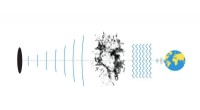
* The Cosmic Microwave Background Radiation (CMB): This faint afterglow of the Big Bang is about 13.8 billion years old. While not an object in the traditional sense, it's the oldest light we can observe, offering a glimpse into the universe shortly after its birth.
* Extremely old stars: Some stars in the Milky Way galaxy are estimated to be nearly as old as the universe itself, around 13.5 billion years old. These stars are incredibly faint and difficult to observe.
* Globular Clusters: These dense collections of stars can contain some of the oldest stars in the universe. Some globular clusters in the Milky Way are estimated to be over 12 billion years old.
It's worth noting that:
* Our observations are limited: We can only see objects that emit light, and the further away an object is, the fainter it appears. This means we might miss extremely old objects that are too faint to detect.
* The universe is constantly changing: Stars are constantly being born and dying, and galaxies are constantly evolving. This means that the oldest objects in the universe may no longer exist, or may have changed beyond recognition.
Ultimately, the question of the "oldest object" in the universe is a complex one with no simple answer. However, the CMB and some of the oldest stars provide fascinating glimpses into the early universe and its evolution.