1. Telescopic Observations:
* Early Observations: Early astronomers used telescopes to observe the Moon's surface, charting craters, mountains, and maria (dark, flat areas). This provided the first detailed information about the Moon's landscape.
* Modern Telescopes: Today, powerful telescopes like the Hubble Space Telescope and ground-based observatories equipped with sophisticated cameras and spectrometers provide high-resolution images and spectral data. This allows scientists to analyze the Moon's surface composition and study its geological history.
2. Spacecraft Missions:
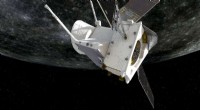
* Flybys: Early spacecraft, like the Soviet Luna series and NASA's Mariner 4, flew by the Moon, capturing images and providing basic information about its surface.
* Orbiters: Missions like NASA's Lunar Reconnaissance Orbiter (LRO) and India's Chandrayaan-1 have orbited the Moon, mapping its entire surface in detail. They have gathered data on the Moon's topography, gravity field, and composition.
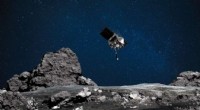
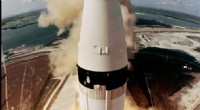
* Landers: Spacecraft like NASA's Apollo missions, the Soviet Luna landers, and China's Chang'e landers have touched down on the Moon's surface. They have taken close-up images, collected samples of lunar rocks and soil, and conducted experiments to understand the Moon's environment.
3. Sample Analysis:
* Lunar Samples: Samples of lunar rocks and soil brought back by the Apollo missions and other missions have been meticulously analyzed in laboratories. This has provided detailed information about the Moon's composition, age, and formation.
4. Remote Sensing Techniques:
* Laser Ranging: By bouncing laser beams off reflectors placed on the Moon by Apollo astronauts, scientists can measure the distance to the Moon with extreme accuracy. This helps understand the Moon's orbit and its interaction with Earth's gravity.
* Radio Telescopes: By studying radio waves emitted from the Moon's surface, scientists can learn about its temperature, composition, and internal structure.
5. Computer Modeling:
* Computer Simulations: Scientists use computer models to simulate the Moon's formation, evolution, and interaction with Earth. This helps understand the processes that shaped the Moon's current features.
Through these combined methods, scientists have accumulated an immense amount of data about the Moon's features, composition, geology, and history. They continue to investigate the Moon with new missions and technologies, uncovering more secrets about our celestial neighbor.