* Gravity: Planets are massive objects with immense gravitational pull. This gravity pulls all the material in the planet towards its center, trying to make it as compact as possible.
* Fluid Behavior: While planets are solid, they behave like fluids over long periods. Imagine a ball of clay; if you squeeze it hard enough, it will become round. The same happens with planets, except the "squeezing" force is gravity.
* Equilibrium: Eventually, the force of gravity and the pressure from the planet's own mass reach a balance, resulting in a roughly spherical shape. This shape is the most stable way for a massive object to distribute its mass under its own gravity.
Why Not Perfectly Round?
Planets aren't perfectly round due to:
* Rotation: Planets spin, and this spinning creates a centrifugal force that pushes outward, slightly bulging the planet at the equator and flattening it at the poles.
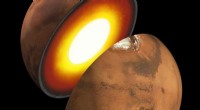
* Internal Structure: The internal structure of a planet can also influence its shape. Variations in density and composition can lead to subtle deviations from a perfect sphere.
* External Influences: The gravitational influence of other celestial bodies can also cause slight distortions in a planet's shape.
In Conclusion:
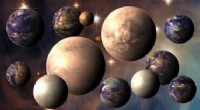
While planets aren't perfectly spherical, they are remarkably close. Gravity, the fluid-like behavior of materials under immense pressure, and the balance of forces create a near-spherical shape, making them the roundest objects in our solar system!