1. Understanding the Sun and its Influence:
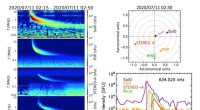
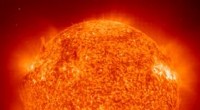
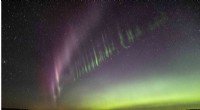
* Solar Wind and Geomagnetic Storms: Auroras are directly caused by the interaction of the solar wind (charged particles from the Sun) with Earth's magnetic field. Studying auroral activity helps scientists understand the Sun's dynamic behavior, its influence on Earth's magnetosphere, and the potential impact of powerful solar storms on our planet's technology.
* Space Weather Forecasting: Predicting space weather events like solar flares and coronal mass ejections is crucial for protecting satellites and astronauts. Auroras provide real-time information about the flow of energy and particles from the Sun, aiding in the development of more accurate space weather forecasts.
2. Exploring Earth's Magnetic Field:
* Magnetic Field Strength and Shape: The shape and strength of Earth's magnetic field determine where auroras are visible. By studying auroral distribution, scientists can map and analyze the magnetic field's behavior, understanding its protective role against harmful solar radiation.
* Magnetic Field Dynamics: Auroras are dynamic, constantly changing shape and intensity. This reveals how the magnetic field interacts with the solar wind, providing insights into its structure and how it can be affected by space weather events.
3. Investigating Atmospheric Processes:
* Energy Transfer and Atmospheric Chemistry: Auroral displays involve the transfer of energy from the Sun to Earth's atmosphere, exciting atmospheric gases and causing them to glow. Studying auroral emissions provides information about atmospheric composition and how energy is transferred through the atmosphere.
* Atmospheric Circulation and Dynamics: Auroras can be used to study global atmospheric circulation and the movement of charged particles in the upper atmosphere.
4. Testing Theoretical Models:
* Space Plasma Physics: Auroral observations provide valuable data for testing and refining theoretical models of space plasma physics, which helps scientists understand the behavior of charged particles in space.
* Solar-Terrestrial Interactions: Auroras are a visible manifestation of solar-terrestrial interactions, providing a natural laboratory for studying how the Sun's activity affects Earth's environment.
In Summary:
The Aurora Borealis is a powerful tool for understanding our Sun, Earth's magnetic field, and the interactions between the two. By studying its dynamic behavior, we can learn valuable information about space weather, atmospheric processes, and the fundamental physics of our solar system.