Here's a breakdown:
1. Red Giant Phase: Stars like our Sun eventually run out of hydrogen fuel in their core. They expand into red giants, fusing heavier elements in their outer layers.
2. Planetary Nebula Formation: The outer layers of the red giant are ejected into space, forming a colorful, expanding cloud called a planetary nebula.
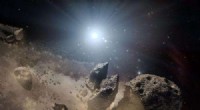
3. White Dwarf: The remaining core, which is primarily composed of carbon and oxygen, is extremely dense and hot. It's about the size of the Earth, but it contains a mass similar to the Sun. This leftover core is called a white dwarf.
White dwarfs are incredibly dense and slowly cool down over billions of years. They no longer undergo nuclear fusion, so they gradually dim and fade into black dwarfs. However, the timescale for this process is longer than the age of the universe, so no black dwarfs have been observed yet.
Important Note: This process only happens to stars with a mass similar to our Sun. Larger stars have a different fate after their lives as red giants, leading to supernova explosions and the formation of neutron stars or black holes.