* Ancient Observations: Ancient civilizations like the Babylonians, Egyptians, and Greeks observed and named the objects we now call planets. They recognized their movement against the background stars, but they didn't understand their nature. They saw them as wandering stars or celestial bodies.
* No Clear Definition: The definition of a planet has changed throughout history. For centuries, the Sun and Moon were considered planets. It wasn't until the 16th and 17th centuries that the concept of planets orbiting the Sun became more established.
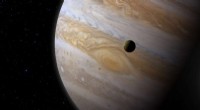
* Technological Advancements: The invention of the telescope in the 17th century allowed for more detailed observations, leading to the discovery of Jupiter's moons, Saturn's rings, and the phases of Venus. These discoveries helped refine our understanding of the solar system.
* Modern Definition: The International Astronomical Union (IAU) in 2006 established the current definition of a planet. This definition focuses on gravitational dominance in its orbit, which excludes Pluto as a planet.
Therefore, attributing the "discovery" of the first planets to a specific person is difficult. It was a gradual process of observation, understanding, and definition refinement over millennia.
However, some notable figures in the history of astronomy who contributed significantly to our understanding of planets include:
* Ancient astronomers: The Babylonians, Egyptians, and Greeks made detailed observations and recorded the positions of the planets.
* Nicolaus Copernicus: Proposed the heliocentric model, placing the Sun at the center of the solar system, revolutionizing our understanding of the planets.
* Galileo Galilei: Used the telescope to observe the phases of Venus, Jupiter's moons, and the rings of Saturn, providing further evidence for the heliocentric model.
* Johannes Kepler: Developed the laws of planetary motion, which described the orbits of the planets around the Sun.
While no single individual discovered the "first" planets, these individuals and countless others played vital roles in shaping our understanding of our solar system and the objects we call planets.