1. Gathering Light:
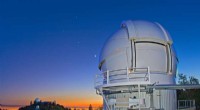
* Telescopes: Large telescopes collect starlight and focus it onto instruments for analysis.
* Space Telescopes: Telescopes like Hubble offer unobstructed views of the cosmos, providing clearer and more detailed observations than ground-based telescopes.
2. Spectroscopy:
* Prisms or Diffraction Gratings: These devices separate light into its different wavelengths, creating a spectrum.
* Spectral Lines: Each element absorbs or emits light at specific wavelengths, creating unique patterns of dark or bright lines called spectral lines.
3. Analyzing Spectra:
* Identifying Elements: By comparing the spectral lines to known atomic fingerprints, astronomers determine the composition of the star.
* Temperature: The intensity and peak wavelength of the star's light reveal its temperature.
* Velocity: The Doppler shift of spectral lines indicates the star's movement towards or away from us.
* Magnetic Fields: Subtle changes in spectral lines reveal the strength and direction of the star's magnetic field.
* Rotation: Broadening of spectral lines indicates the star's rotational speed.
4. Other Techniques:
* Photometry: Measuring the brightness of a star over time helps determine its size, distance, and variability.
* Astrometry: Precisely measuring a star's position in the sky reveals its proper motion and the effects of unseen companions.
* Interferometry: Combining light from multiple telescopes allows astronomers to create a virtual telescope with higher resolution, revealing finer details of the star's surface.
Applications of Star Analysis:
* Stellar Evolution: Understanding the life cycle of stars, from birth to death.
* Galactic Structure: Mapping the distribution of stars in the Milky Way and other galaxies.
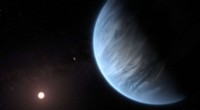
* Exoplanet Detection: Analyzing the wobble of a star's light reveals the presence of orbiting planets.
* Cosmology: Studying the distribution and evolution of galaxies and the universe as a whole.
Through these techniques, astronomers can unlock the secrets of stars, unveiling their composition, temperature, age, and even the presence of planets around them.