Appearance:
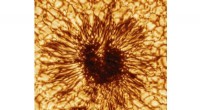
* Color: Low mass stars tend to be reddish due to their lower surface temperatures (around 3,000-4,000 K), while medium mass stars like our Sun are yellow (around 5,500 K).
* Luminosity: Low mass stars are dim and have a low luminosity, while medium mass stars are brighter.
* Size: Low mass stars are small and compact, while medium mass stars are larger than their low mass counterparts.
Lifespan:
* Long lifespan: Low mass stars have very long lifespans, burning their fuel slowly and lasting for billions of years. Medium mass stars like our Sun have a moderate lifespan, lasting around 10 billion years.
Evolution:
* Red Giant Phase: Low and medium mass stars eventually become red giants, expanding significantly as they run out of hydrogen fuel and start fusing helium.
* White Dwarf: After the red giant phase, these stars shed their outer layers, leaving behind a dense, Earth-sized white dwarf.
Examples:
* Low mass stars: Proxima Centauri (the closest star to our Sun), Barnard's Star
* Medium mass stars: Our Sun, Alpha Centauri A and B
Key Point: The exact appearance and lifespan of a low or medium mass star depend on its precise mass. More massive stars are hotter, brighter, and have shorter lifespans than their less massive counterparts.