Here's why:
* Massive Stars: These are stars with initial masses 8 times greater than our Sun.
* Short Lifespan: They burn through their fuel quickly due to their high mass, resulting in a shorter lifespan than smaller stars.
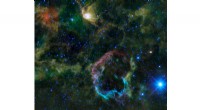
* Supernova Explosion: When a massive star runs out of fuel, it collapses under its own gravity, triggering a catastrophic explosion known as a supernova.
* Remnant Core: The core of the star collapses further after the supernova, forming a dense and incredibly strong object.
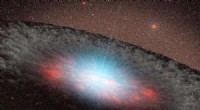
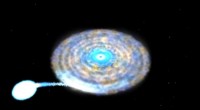
* Black Hole Formation: If the core is massive enough (more than about 3 times the mass of our Sun), its gravity becomes so strong that not even light can escape – creating a black hole.
Other Possible Outcomes:
While a black hole is the most common outcome, some massive stars can also end their lives as neutron stars. These are incredibly dense objects that form when the core of a massive star collapses, but the mass isn't sufficient to form a black hole.