1. The Starting Point: The Nebula
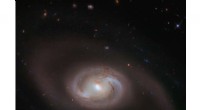
* Composition: A nebula is a giant cloud of gas and dust, primarily hydrogen and helium. It's incredibly cold and diffuse, spread out over vast distances.
* Triggering Collapse: The collapse of a nebula is usually triggered by a nearby supernova explosion, a shockwave from a passing star, or the gravitational pull of a nearby star cluster.
2. The Collapse Begins
* Gravitational Instability: The trigger causes the nebula to begin contracting due to its own gravity. As the cloud shrinks, it spins faster and faster (conservation of angular momentum).
* Heating and Flattening: As the cloud collapses, particles collide and heat up. The spinning motion causes the cloud to flatten into a disk, with a denser, hotter core forming at the center.
3. The Protostar Forms
* Core Formation: The center of the disk becomes so dense and hot that nuclear fusion begins. This is when a protostar is born.
* Stellar Wind: The protostar emits a powerful stellar wind that pushes away remaining gas and dust from its immediate surroundings.
4. Planet Formation
* Accretion: Dust and gas in the disk start clumping together due to gravity. These clumps grow larger and larger, eventually forming planetesimals, small bodies similar to asteroids.
* Planetary Growth: Planetesimals collide and merge, gradually growing into larger planets. The process is faster in the inner regions where there's less ice and more rocky material.
* Differentiation: As planets grow, heavier elements sink to the core, leading to a layered structure with a solid core and a gaseous atmosphere (for gas giants).
5. The Remaining Debris
* Asteroid Belt & Kuiper Belt: Not all the material in the disk forms planets. The leftover planetesimals create asteroid belts and cometary reservoirs like the Kuiper Belt.
* Clearing the Disk: The young star's stellar wind, along with gravitational interactions, eventually sweep away most of the remaining gas and dust, leaving behind a well-defined planetary system.
6. The Solar System Evolves
* Gravitational Interactions: Planets continue to interact gravitationally with each other, causing their orbits to evolve. Some planets may even be ejected from the system.
* Stable System: Over millions of years, the system settles into a relatively stable configuration, with planets orbiting their star in predictable paths.
Key Points to Remember:
* This process is a complex interplay of gravity, heat, and collisions.
* The formation of planets takes millions of years.
* There are many variations in planetary system formation, leading to a diverse range of planets and configurations.
Let me know if you have any more questions about nebulae or solar system formation!