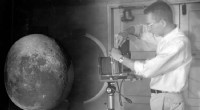
* The Moon doesn't have a "dark side". The Moon is constantly rotating, and both sides receive sunlight.
* What we call the "dark side" is actually the far side of the Moon. This is the side that always faces away from Earth.
* The side of the Moon facing Earth is sometimes called the "near side".
Why we only see one side of the Moon:
The Moon's rotation period is the same as its orbital period around Earth. This means it takes the Moon about 27.3 days to rotate once on its axis and to complete one orbit around Earth. This synchronized rotation is why we only ever see one side of the Moon.
So, what's the difference between the near side and the far side?
* The near side: This is the side we see from Earth. It has vast, dark plains called maria (Latin for "seas"), formed by ancient volcanic eruptions. It also has many craters.
* The far side: This side is less familiar, but it has a different appearance than the near side. It has fewer maria and more craters. The far side is also known to have a thicker crust than the near side.
It's important to remember that both sides of the Moon receive sunlight, it's just that we only see one side from Earth due to the synchronous rotation.