Electromagnetic Radiation:
* Light: Visible light is a small portion of the electromagnetic spectrum that the Sun emits. It's what we see as sunlight.
* Infrared Radiation: We feel this as heat. It's what warms the Earth and makes life possible.
* Ultraviolet (UV) Radiation: UV radiation is invisible to the human eye but can cause sunburns and skin cancer.
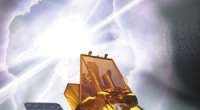
* X-rays and Gamma Rays: These are very high-energy forms of radiation that are mostly blocked by the Earth's atmosphere.
Particles:
* Solar Wind: A continuous stream of charged particles (mainly protons and electrons) flowing outwards from the Sun. This wind can cause geomagnetic storms that can disrupt satellites and power grids.
* Coronal Mass Ejections (CMEs): Large bursts of plasma and magnetic fields that are released from the Sun's corona. These can be extremely powerful and can cause significant disturbances in the Earth's magnetosphere.
* Solar Flares: Sudden, intense bursts of energy from the Sun's surface. They emit large amounts of radiation, particularly in the form of X-rays.
The composition of the Sun's emissions is influenced by its internal processes, particularly nuclear fusion reactions occurring in its core. These reactions create the energy that powers the Sun and drive the emission of all these different forms of radiation and particles.