Here's a breakdown of the theory:
* Early Earth: Around 4.5 billion years ago, a young Earth was still forming and was likely a molten ball of rock.
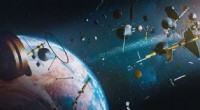
* The Collision: A Mars-sized object, Theia, collided with Earth at a glancing blow. The impact was incredibly powerful, vaporizing much of both bodies and sending a massive amount of debris into orbit around Earth.
* Formation of the Moon: The debris from the collision, made up of both Earth and Theia material, coalesced under its own gravity to form the Moon.
Supporting Evidence:
* Composition: The Moon's composition is similar to Earth's mantle, but it's also slightly different, suggesting a mix of materials from both Earth and Theia.
* Angular Momentum: The Earth-Moon system has a high angular momentum, which is difficult to explain without a giant impact.
* Moon's Tilt: The Moon's orbit is tilted relative to Earth's equator, which can be explained by a glancing impact.
* Isotopic Analysis: Studies of lunar and Earth rocks show that the Moon's isotopic composition is more similar to Earth's than to other solar system objects.
Alternative Theories:
While the Giant Impact Hypothesis is the most widely accepted theory, other theories exist, but they lack the same level of scientific support:
* Capture Hypothesis: The Moon was formed elsewhere in the solar system and was later captured by Earth's gravity.
* Co-formation Hypothesis: The Earth and Moon formed at the same time from the same disk of material.
Continued Research:
Scientists continue to study the Moon and Earth to refine our understanding of the Giant Impact event. Future missions and analysis of lunar samples will help to further confirm or refine this theory.