Our solar system is home to eight unique planets, each with distinct characteristics and features that make them fascinating to study. Let's break down each planet, separating them into inner and outer groups:
Inner Planets (Terrestrial):
* Mercury: The smallest and innermost planet, Mercury is a rocky world with a thin atmosphere and cratered surface. It's closest to the sun, making it scorching hot during the day, and freezing cold during the night. It has a surprisingly large iron core that generates a weak magnetic field.
* Venus: Often called Earth's "twin," Venus is almost the same size and mass as our planet. However, its dense, toxic atmosphere traps heat, making it the hottest planet in our solar system. Venus rotates slowly and backwards compared to most planets, making its days longer than its years.
* Earth: Our home planet boasts a diverse landscape, abundant water, and a complex atmosphere that supports life. It's the only known planet with liquid water on its surface and the only known planet with life. Earth's unique magnetic field protects us from solar wind.
* Mars: The "Red Planet" is a cold and dusty world with a thin atmosphere. It has a surface with vast plains, canyons, and mountains, and evidence suggests that it once had flowing water. Mars is a prime target for future exploration due to its potential for past or present life.
Outer Planets (Gas Giants and Ice Giants):
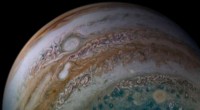
* Jupiter: The largest planet in our solar system, Jupiter is a gas giant composed mostly of hydrogen and helium. It has a swirling atmosphere with a Great Red Spot, a giant storm that has raged for centuries. Jupiter boasts dozens of moons and a faint ring system.
* Saturn: Famous for its prominent ring system, Saturn is another gas giant, primarily composed of hydrogen and helium. It has a complex atmosphere with swirling storms and a hexagonal jet stream at its north pole. Saturn has over 80 moons, including the icy moon Titan, which has a thick atmosphere and lakes of methane.
* Uranus: An ice giant, Uranus is tilted on its side, making it appear to rotate on its side. Its atmosphere is composed mainly of hydrogen, helium, and methane, which gives it its distinctive blue-green color. Uranus has a system of faint rings and over 20 moons.
* Neptune: The farthest planet from the sun, Neptune is another ice giant with a blue-colored atmosphere due to methane. It has the strongest winds in our solar system and boasts 14 known moons. Neptune's atmosphere is turbulent and features a Great Dark Spot similar to Jupiter's Great Red Spot.
Planet-like Objects:
Beyond Neptune, there lies a region called the Kuiper Belt, a vast ring of icy bodies. Some notable objects include:
* Pluto: Once considered the ninth planet, Pluto is now classified as a dwarf planet. It is smaller than Earth's moon and has a diverse surface with mountains, plains, and a heart-shaped region made of nitrogen ice.
* Eris: Another dwarf planet in the Kuiper Belt, Eris is slightly larger than Pluto. It has a very reflective surface, likely due to the presence of methane ice.
Each planet in our solar system offers a unique perspective on planetary evolution and the diversity of celestial objects. Further exploration of these fascinating worlds will continue to reveal more about their history and formation, and potentially answer questions about the origin of life itself.