Composition:
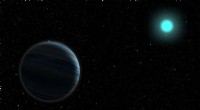
* Primarily composed of hydrogen and helium: These planets are largely made of light elements, with a much smaller proportion of heavier elements like rock and ice.
* Rocky core: While the majority of their mass is gas, they are believed to have a dense, solid core made up of rock and ice.
* Atmosphere: They have thick, turbulent atmospheres with complex cloud formations, mostly composed of hydrogen, helium, methane, ammonia, and water.
Size and Mass:
* Massive: They are significantly larger and more massive than the terrestrial planets. Jupiter, the largest, is about 11 times wider than Earth and has a mass that's more than 300 times greater.
* Low density: Their low density is due to their gaseous composition.
Rotation and Magnetic Fields:
* Fast rotation: Jovian planets rotate very quickly, which contributes to their strong magnetic fields.
* Strong magnetic fields: They have powerful magnetic fields, many times stronger than Earth's, which can trap charged particles and create radiation belts.
Other characteristics:
* No solid surface: They lack a defined solid surface, as their atmosphere gradually transitions into their interior.
* Ring systems: All Jovian planets have ring systems, though they vary significantly in size and composition.
* Many moons: They have numerous moons, ranging in size from tiny, rocky bodies to large, planet-like objects with their own atmospheres.
* Internal heat: They generate internal heat through gravitational contraction, leading to strong atmospheric circulation and powerful storms.
Examples of Jovian planets in our solar system:
* Jupiter
* Saturn
* Uranus
* Neptune