Here are some key features and functions of an observatory:
* Housing Telescopes: Observatories usually house one or more telescopes, which are essential for collecting light from distant objects and magnifying them for observation.
* Location: Observatories are often built in remote locations with dark skies, minimal light pollution, and stable weather conditions to maximize visibility.
* Instruments: Observatories are equipped with a variety of instruments, such as spectrometers, cameras, and detectors, to analyze the light collected by telescopes and extract information about the observed objects.
* Research: Observatories are vital for astronomical research. Scientists use the data gathered at observatories to study the universe, understand its evolution, and discover new celestial bodies.
* Education and Outreach: Many observatories also play an important role in education and outreach, offering tours and public viewing sessions to inspire people about astronomy and the universe.
There are many types of observatories, each with its own unique focus:
* Optical Observatories: These observatories use optical telescopes to observe visible light.
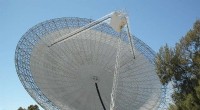
* Radio Observatories: These observatories use radio telescopes to observe radio waves emitted by celestial objects.
* Space Observatories: These observatories are placed in space, above the Earth's atmosphere, to avoid interference from Earth's atmosphere and provide a clearer view of the universe. Examples include the Hubble Space Telescope and the James Webb Space Telescope.
In summary, an observatory is a dedicated facility where scientists use telescopes and other instruments to observe and study the universe, contributing to our understanding of the cosmos and its wonders.