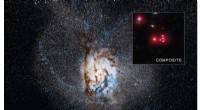
* Color and Temperature: A star's color is directly related to its surface temperature. Hotter stars emit more blue light, while cooler stars emit more red light. This is similar to how a piece of metal glows red when heated, then orange, yellow, and eventually white as it gets even hotter.
* Stellar Evolution: Stars evolve over time, changing their size, temperature, and luminosity. As a star ages, it begins to fuse heavier elements in its core. This process can cause the star to expand significantly, becoming a red giant. While the total energy output (luminosity) of the star might increase, the surface area also increases dramatically, leading to a decrease in surface temperature.
In Summary: The shift from blue to red indicates that the star has cooled down as it enters a later stage of its life cycle.