* Gravity is weak: The primary way to affect spacetime is through gravity. While a nuclear explosion releases a tremendous amount of energy, the resulting gravitational field is still minuscule compared to massive celestial objects like stars or black holes.
* Local effects: A nuclear explosion creates localized distortions in spacetime, but these are extremely small and short-lived. Imagine dropping a pebble into a pond – it creates ripples, but these quickly dissipate.
* Energy release: The energy released in a nuclear explosion is primarily in the form of electromagnetic radiation (light, heat, gamma rays) and kinetic energy (blast wave). While this energy can affect objects in its path, it doesn't fundamentally alter the fabric of spacetime.
What does affect spacetime?
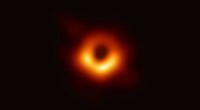
* Massive objects: Stars, planets, galaxies, and black holes have enough mass to significantly warp spacetime around them. This warping is what causes gravity.
* Rapid acceleration: According to Einstein's theory of relativity, accelerating objects can also distort spacetime. This is why time can slow down for objects traveling at near-light speeds.
In summary:
A nuclear explosion is incredibly powerful, but it doesn't have a significant impact on the spacetime continuum. To create meaningful distortions in spacetime, you need objects with immense mass or those undergoing extreme acceleration.