1. Observing Different Stages of Stars:
* Stellar Spectra: We analyze the light from stars, which reveals their chemical composition, temperature, and speed. This allows us to categorize stars into groups based on their properties, like red giants, white dwarfs, and main sequence stars.
* Star Clusters: Clusters contain stars born at roughly the same time. By studying these clusters, we can see stars at different stages of their lives, providing a snapshot of stellar evolution.
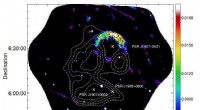
* Supernova Remnants: The remnants of exploded stars (supernovae) offer clues about the final stages of massive star evolution.
2. Theoretical Models:
* Physical Laws: We use the well-established laws of physics, especially gravity and nuclear physics, to create theoretical models that simulate the evolution of stars. These models factor in variables like mass, composition, and energy output.
* Computer Simulations: With powerful computers, we can run complex simulations that track the evolution of stars from birth to death, allowing us to explore different scenarios and test theoretical predictions.
3. Comparing Observations and Theory:
* Verification: The models are constantly refined and improved by comparing their predictions with actual observations. If a model predicts something we don't observe, or vice versa, it suggests the need for adjustments to the model.
In short, we're not just looking at individual stars, but at a vast sample of stars in various states, and using physics to understand the underlying processes. This combination allows us to piece together the story of stellar evolution even though we haven't witnessed it unfold in real time.
Analogy: Imagine you're studying a forest. You can't watch every tree grow from seed to giant, but by examining trees of different ages, and understanding the basic processes of tree growth, you can piece together the story of the forest's evolution.
The study of stars is much the same, using a combination of observation, theoretical models, and a deep understanding of the universe's laws to decipher the fascinating story of stellar evolution.