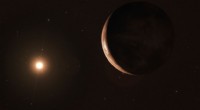
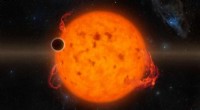
1. No Light: The most obvious consequence is the absence of starlight. The universe would be plunged into eternal darkness, save for the faint glow of distant galaxies.
2. No Heat and Energy: Stars are the primary source of heat and energy in the universe. Without them, the universe would be incredibly cold, with an average temperature close to absolute zero.
3. No Elements Heavier than Helium: Stars are the cosmic furnaces where heavier elements are forged through nuclear fusion. Without stars, the universe would only consist of hydrogen and helium, the lightest elements. This means:
* No Planets: Planets are formed from the accretion of dust and gas, which are largely made up of heavier elements.
* No Life as We Know It: The atoms that make up our bodies, including carbon, oxygen, nitrogen, etc., were created inside stars.
4. No Gravity Wells: Stars have a significant gravitational pull. Their absence would disrupt the balance of the universe, potentially leading to:
* Disrupted Galaxies: Without the gravitational pull of stars, galaxies might not form or remain stable.
* Less Structure: The universe would be a more homogenous, less structured place, lacking the clusters and superclusters of galaxies we see today.
5. No Supernovae: Supernovae, the explosions of dying stars, are essential for dispersing heavy elements into space, providing the raw materials for new star and planet formation.
In summary:
* The universe would be cold, dark, and devoid of life as we know it.
* There would be no planets, no heavy elements, and no complex structures like galaxies.
* The universe would be a very different, and likely much less interesting, place.
While the idea of a starless universe is intriguing, it's important to remember that our understanding of the universe is based on the presence of stars. It's impossible to say for sure what would happen in such a scenario, as it would fundamentally change the laws of physics as we know them.