Objects and Phenomena:
* Stars: Their birth, life, death, and evolution.
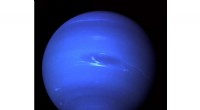
* Planets: Formation, characteristics, and potential for life.
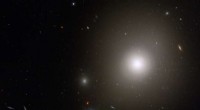
* Galaxies: Structure, evolution, and the distribution of matter in the universe.
* Black holes: Mysterious objects with immense gravity.
* Nebulae: Clouds of gas and dust where stars are born.
* Supernovae: Powerful explosions marking the death of massive stars.
* Quasars: Extremely bright objects powered by supermassive black holes.
* Dark matter and dark energy: Mysterious substances that make up most of the universe.
Scientific Tools and Techniques:
* Telescopes: Instruments used to observe celestial objects.
* Spectroscopy: Studying the light from stars and galaxies to understand their composition and motion.
* Astrophysics: Applying physics to understand astronomical phenomena.
* Spacecraft: Used to explore planets, moons, and other celestial bodies.
* Computer simulations: Used to model and understand astronomical processes.
Historical and Cultural Context:
* Ancient civilizations: Astronomy has been studied since the dawn of human civilization.
* Mythology and folklore: Many cultures have stories and legends about the stars and planets.
* Navigation and timekeeping: Astronomy has been used for navigation and timekeeping since antiquity.
Modern Applications:
* Satellite technology: Used for communication, navigation, and Earth observation.
* Cosmology: The study of the origin and evolution of the universe.
* Astrobiology: The search for life beyond Earth.
Overall, astronomy is a fascinating and ever-evolving field that explores the vastness and wonder of the universe.