1. Main Sequence Life:
* A star begins its life as a cloud of gas and dust, primarily hydrogen.
* Gravity pulls this material together, forming a protostar.
* As the protostar collapses, it heats up, eventually reaching a temperature high enough to ignite nuclear fusion in its core.
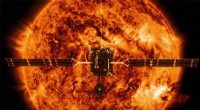
* Fusion converts hydrogen into helium, releasing enormous energy that creates outward pressure counteracting gravity. This balance creates a stable star on the main sequence, like our Sun.
2. Red Giant Phase:
* As a star ages, it runs out of hydrogen fuel in its core.
* Fusion shifts to a shell around the core, where it fuses helium into heavier elements like carbon and oxygen.
* This process causes the star to expand dramatically, becoming a red giant.
3. Planetary Nebula Formation:
* Eventually, the core becomes unstable and contracts, leading to a powerful outburst of energy.
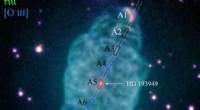
* This outburst ejects the outer layers of the star, forming a glowing shell of gas and dust called a planetary nebula.
4. White Dwarf Formation:
* What remains at the core is a dense, hot, and very small object – the white dwarf.
* White dwarfs are primarily composed of carbon and oxygen, with some remaining helium.
* They have a mass similar to our Sun but are only about the size of the Earth.
* This intense density and gravity give white dwarfs extremely high surface temperatures, typically around 25,000 to 100,000 degrees Celsius.
5. Cooling and Fading:
* White dwarfs lack the fuel to sustain nuclear fusion, so they gradually cool and fade over billions of years.
* Eventually, they become extremely faint, almost invisible, and are known as "black dwarfs".
Key Points:
* Only stars with masses up to about eight times the Sun's mass become white dwarfs.
* Heavier stars go through a different process, ending their lives as neutron stars or black holes.
* White dwarfs are incredibly dense. A teaspoonful of white dwarf material would weigh several tons on Earth.
Final Note:
The process of a star becoming a white dwarf takes billions of years. It's a slow and complex process that highlights the amazing evolution of stars in the universe.