Early Atmosphere (Noachian Period):
* Volcanic Outgassing: Like Earth, Mars likely experienced intense volcanic activity during its early stages. This released gases like carbon dioxide, water vapor, nitrogen, and sulfur dioxide, forming a dense, thick atmosphere.
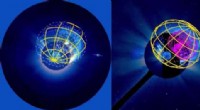
* Solar Wind: Early on, Mars was bombarded with solar wind, which stripped away some of its initial atmosphere.
Evolution and Loss (Hesperian & Amazonian Periods):
* Loss of Magnetic Field: Mars' magnetic field, which protects against the solar wind, weakened and eventually disappeared. This exposed the atmosphere to direct erosion by the solar wind.
* Escape of Lighter Gases: The solar wind and thermal escape (where gases gain enough energy to escape Mars' gravity) caused lighter elements like hydrogen and helium to escape into space.
* Carbon Dioxide Sequestration: Carbon dioxide, a significant greenhouse gas, reacted with minerals on the surface and became trapped as carbonates.
* Ice Caps: Much of the water vapor condensed and formed ice caps at the poles.
Current Atmosphere (Thin and Dry):
* Thin and Cold: The atmosphere of Mars is extremely thin, with a surface pressure less than 1% of Earth's. It's composed primarily of carbon dioxide (95%), with small amounts of nitrogen, argon, oxygen, and water vapor.
* Dust Storms: The thin atmosphere allows dust storms to develop easily, sometimes covering the entire planet.
Ongoing Research:
* Missions to Mars: Missions like Curiosity, Perseverance, and the ExoMars Trace Gas Orbiter are gathering crucial data about the Martian atmosphere, helping us understand its history and present state.
* Climate Models: Scientists are developing complex climate models to simulate Mars' atmospheric evolution and test different hypotheses about its formation.
Future Research:
* Unraveling the Timing of Atmospheric Loss: Determining the precise time frame for the loss of the magnetic field and the escape of gases is crucial for understanding Martian habitability.
* Identifying the Source of Methane: The presence of methane in the Martian atmosphere is puzzling, as it should be unstable in the current conditions. Understanding its source could reveal signs of past or present life.
The formation of Mars' atmosphere is a fascinating story that continues to unfold. As we explore the Red Planet further, we're gaining a deeper understanding of its atmospheric history and its potential for supporting life, both in the past and maybe even in the future.