1. Orbital Period and Distance:
- We observe the orbital period (how long it takes a moon or satellite to orbit a planet) and the distance of that moon or satellite from the planet.
- Kepler's Third Law of Planetary Motion tells us that the square of the orbital period is proportional to the cube of the orbital radius. This relationship is directly tied to the gravitational force between the planet and its moon/satellite.
- By plugging in the observed values, we can calculate the gravitational force acting on the moon/satellite, and from that, we can determine the planet's mass (and thus its gravity).
2. Doppler Shift:
- Light from a star will be slightly shifted in frequency (redshifted or blueshifted) as it is affected by the gravity of a planet orbiting it.
- We can measure this shift using spectrographs, and the amount of shift tells us the mass of the planet. This method is particularly useful for discovering exoplanets (planets orbiting other stars).
3. Spacecraft Trajectories:
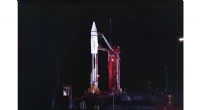
- When a spacecraft flies past a planet, its trajectory is slightly affected by the planet's gravity.
- We can precisely measure the spacecraft's path and use this information to calculate the planet's gravity.
In summary, we don't directly measure gravity using gravity itself, but rather use other observable phenomena related to gravity (like orbital motion, light shift, or spacecraft trajectories) to calculate the gravitational force of a planet.