The Role of the Retina and Photoreceptor Cells
* Fovea: The center of your retina (the back of your eye) is called the fovea. It's packed with cone cells, which are responsible for sharp, detailed vision and color perception. However, they are less sensitive to low light.
* Peripheral Vision: The area around the fovea has more rod cells, which are highly sensitive to dim light. This is why you can see things in your peripheral vision that you can't directly look at.
How It Works
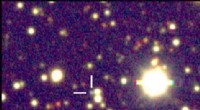
1. Direct Focus: When you look directly at a faint star, the light hits the fovea, which is dominated by cones. Cones aren't as good at detecting low levels of light, making the star appear faint or even invisible.
2. Off-Center Focus: When you look slightly away from the star, the light hits the peripheral retina, where there are more rod cells. These cells are much more sensitive to low light, allowing you to see the faint star more clearly.
Think of it this way: Imagine you're looking at a dim light in a dark room. If you stare directly at it, it might seem barely there. But if you shift your gaze slightly to the side, the light seems brighter because it's hitting your more light-sensitive peripheral vision.
Why This Is Useful for Astronomy:
This phenomenon is a common technique used by astronomers. By looking slightly away from a faint object, they can better discern its presence and details. It's also why some telescopes use "off-axis guiding" to ensure that the faintest stars are properly captured.