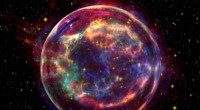
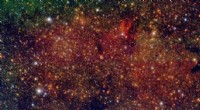
* Stars form from collapsing clouds of gas and dust. The process of star formation involves a massive cloud of material collapsing under its own gravity. The core of the cloud heats up as it compresses, and eventually, nuclear fusion starts, turning hydrogen into helium and releasing immense energy.
* The minimum mass for nuclear fusion is about 0.08 solar masses. This is roughly 80 times the mass of Jupiter. Objects below this mass, even if they form within a collapsing cloud, are not massive enough to trigger nuclear fusion and remain brown dwarfs.
So, it's not about a planet transforming into a star. It's about the amount of material that initially gathers together to form a star in the first place. A planet, even a very large one, would need to gain significantly more mass to reach the threshold for nuclear fusion.
Here's a breakdown of the concepts:
* Planets: Form from smaller particles in the disk around a young star. They don't undergo nuclear fusion.
* Brown Dwarfs: Massive objects that are too small to sustain nuclear fusion. They are sometimes called "failed stars."
* Stars: Objects massive enough for nuclear fusion to occur in their core. They emit light and heat.
It's worth noting that there's a continuous spectrum of masses from planets to stars, with brown dwarfs bridging the gap.