Here's a breakdown of what makes them special:
Ingredients:
* Molecular clouds: These are the primary component of stellar nurseries. They are dense, cold clouds of gas, primarily hydrogen and helium, with traces of heavier elements. The molecules within these clouds can absorb and emit light, making them visible in infrared and radio wavelengths.
* Dust: The presence of dust particles is crucial. They absorb ultraviolet light, shielding the gas from intense radiation and allowing it to cool down. This cooling process is essential for gravitational collapse and star formation.
Processes:
1. Gravitational collapse: The immense gravity within a molecular cloud pulls the gas and dust inward. As the cloud collapses, it becomes denser and hotter.
2. Fragmentation: The collapsing cloud fragments into smaller clumps, each containing enough mass to form a star.
3. Protostar formation: As the clumps continue to collapse, they form protostars, which are the early stages of star formation. Protostars are still surrounded by a disk of gas and dust, and they are not yet generating energy through nuclear fusion.
4. Nuclear fusion ignition: As the protostar continues to collapse, its core becomes extremely hot and dense. Eventually, the temperature and pressure reach a critical point, triggering nuclear fusion. This marks the birth of a true star, which begins to shine brightly.
Characteristics:
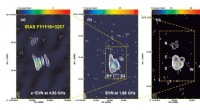
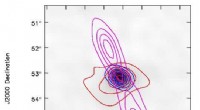
* Visible in infrared and radio: Stellar nurseries are often hidden behind veils of dust, making them difficult to observe in visible light. However, they glow brightly in infrared and radio wavelengths, revealing the ongoing star formation processes.
* Variety of sizes and shapes: Stellar nurseries come in various sizes and shapes, from small, compact regions to massive, sprawling complexes. Some well-known examples include the Orion Nebula, the Eagle Nebula, and the Carina Nebula.
* Active environments: Stellar nurseries are dynamic and energetic places, with powerful winds, jets, and radiation emanating from the newborn stars. These forces can influence the surrounding gas and dust, shaping the nursery and contributing to the formation of new stars and planets.
Importance:
* Stellar evolution: Stellar nurseries are crucial for understanding the birth and evolution of stars.
* Planet formation: The disks of gas and dust surrounding protostars are the birthplace of planets.
* Understanding the universe: Studying stellar nurseries helps us understand the composition and evolution of our galaxy and the universe as a whole.
Stellar nurseries are awe-inspiring cosmic laboratories where stars are born and planets are formed. They offer a glimpse into the processes that have shaped our universe and continue to drive the creation of new worlds.