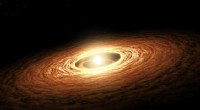
* High-energy radiation from hot stars: These nebulae are typically found near hot, young, massive stars. These stars emit copious amounts of ultraviolet (UV) radiation.
* Ionization and excitation: The UV radiation from these stars is powerful enough to strip electrons from the atoms in the surrounding gas (primarily hydrogen). This process is called ionization. The atoms are now ionized and exist in a higher energy state.
* Recombination and emission: The ionized atoms are unstable and quickly recombine with electrons. During recombination, the electrons drop to lower energy levels, releasing the excess energy as photons of light. These photons have specific wavelengths, producing the characteristic colors of emission nebulae.
* Abundance of gas: Ionization nebulae contain vast amounts of gas, typically hydrogen. This provides a large number of atoms to be ionized and excited, leading to a large amount of light emission.
* Dust scattering: While not the primary source of the brightness, dust particles within the nebula can also contribute to the overall luminosity by scattering the emitted light.
In summary: The combination of high-energy radiation from hot stars, ionization and excitation of gas atoms, subsequent recombination and light emission, and the abundance of gas within the nebula contributes to the remarkable brightness of ionization nebulae.