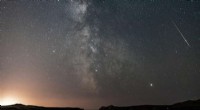
* Cosmic: This implies something originating in the universe, outside of our planet. It could be from stars, galaxies, nebulae, black holes, or even the very early universe.
* Light: This refers to electromagnetic radiation, which can be visible light (what we see) but also includes other forms like infrared, ultraviolet, X-rays, and gamma rays.
Here are some examples of cosmic light:
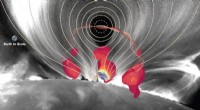
* Sunlight: While it warms and lights our planet, it's actually cosmic light from the Sun, a star.
* Starlight: Light from other stars in our galaxy and beyond.
* Nebulae: Clouds of gas and dust that emit or reflect light.
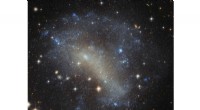
* Galaxies: Collection of stars and other celestial objects that emit light.
* Cosmic Microwave Background Radiation: A faint afterglow of the Big Bang, a type of light that fills the entire universe.
Studying cosmic light:
Astronomers use telescopes and detectors to study cosmic light, which tells us about the composition, age, and evolution of the universe.
* Spectroscopy: Analyzing the light spectrum can reveal the chemical composition of stars and galaxies.
* Redshift: Analyzing how light has been stretched or shifted as it travels through space can tell us how fast objects are moving away from us.
In summary, cosmic light is the light that originates from celestial objects beyond Earth. It's a powerful tool that astronomers use to learn about the universe.