1. Composition:
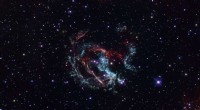
* Emission Nebulae: These are glowing clouds of gas, often ionized by nearby stars. They emit light at specific wavelengths, giving them a characteristic color depending on the dominant element. For example, hydrogen produces a red hue, while oxygen shines blue.
* Reflection Nebulae: These nebulae don't emit light themselves but reflect light from nearby stars. They often have a bluish hue, as blue light is scattered more effectively than other colors.
* Dark Nebulae: These are dense clouds of gas and dust that absorb light from behind them. They appear as dark patches against a brighter background, often hiding young stars forming within them.
2. Shape and Structure:
* Diffuse Nebulae: These are large, irregular clouds of gas and dust. Their shape is often influenced by stellar winds, supernova explosions, or gravitational forces.
* Planetary Nebulae: These are smaller, spherical, or elliptical clouds formed by the outer layers of dying stars. They often have intricate and colorful patterns, reflecting the complex processes of stellar evolution.
3. Age and Evolution:
* Young Nebulae: These are often associated with star formation regions. They tend to be bright and chaotic, with active star formation processes happening within them.
* Older Nebulae: These have had more time to evolve and may have been shaped by stellar winds or supernova explosions. They often have a more complex and intricate structure.
4. Distance and Perspective:
* Nearby Nebulae: These appear larger and more detailed. We can see individual stars and gas clouds within them.
* Distant Nebulae: These appear smaller and less detailed. They may only be visible as faint patches of light.
5. Viewing Conditions:
* Earth's Atmosphere: The Earth's atmosphere can distort the appearance of nebulae, making them appear blurry or less sharp.
* Light Pollution: Artificial light from cities can interfere with our ability to see faint nebulae.
Therefore, the diverse appearance of nebulae reflects the wide variety of physical processes that contribute to their formation and evolution, as well as the influence of our viewing perspective.