Here's a breakdown of the process:
1. Main Sequence: The Sun is currently in its main sequence phase, fusing hydrogen into helium in its core. This process releases energy, making the Sun shine.
2. Red Giant: As the Sun runs out of hydrogen fuel, it starts fusing helium into heavier elements. This causes the Sun to expand into a red giant, engulfing the inner planets like Mercury and Venus.
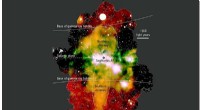
3. Planetary Nebula: Eventually, the Sun's outer layers will be ejected, forming a beautiful shell of gas called a planetary nebula. This is a relatively short-lived phase, lasting only a few thousand years.
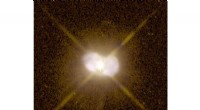
4. White Dwarf: At the core of the Sun, a dense, hot remnant of the star will remain: a white dwarf. This is a very small, dense object, about the size of Earth. It is composed mainly of carbon and oxygen.
5. Cooling Down: Over trillions of years, the white dwarf will gradually cool down and fade, eventually becoming a cold, dark black dwarf. However, the time scales for this process are so immense that no black dwarfs are predicted to exist yet in the universe.
Key Points:
* White dwarfs are very dense, with a teaspoonful weighing tons.
* They have no internal nuclear fusion, so they slowly radiate away their remaining heat.
* The mass of a white dwarf determines its fate. If it's massive enough, it can collapse into a neutron star or a black hole.
* Our Sun is not massive enough to form a neutron star or a black hole.
So, while our Sun may seem eternal, it is a star with a finite lifespan. But its final form as a white dwarf will still shine for a long, long time.