* Stars: Their formation, life cycle, composition, and evolution.
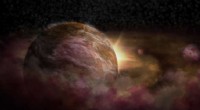
* Planets: Their formation, atmospheres, surfaces, and potential for life.
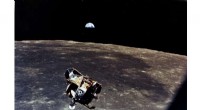
* Moons: Their formation, orbits, and interaction with their parent planets.
* Galaxies: Their structure, formation, and evolution.
* Nebulae: Giant clouds of gas and dust where stars are born.
* Black Holes: Regions of spacetime where gravity is so strong that nothing, not even light, can escape.
* Supernovae: Powerful explosions that mark the death of massive stars.
* Cosmic Microwave Background Radiation: Remnant radiation from the Big Bang.
Astronomy also involves studying the origin and evolution of the universe as a whole.
So, while astronomy primarily focuses on celestial bodies, it also delves into the broader realm of the cosmos and its mysteries.