Space probes have been instrumental in expanding our understanding of the solar system and beyond. Here's a breakdown of some notable probes and their achievements:
Inner Solar System:
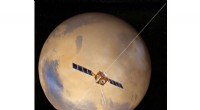
* Mariner 4 (1964): First successful flyby of Mars, providing the first close-up images of the red planet, revealing its cratered surface.
* Mariner 9 (1971): Orbited Mars, mapping its surface and revealing its volcanoes, canyons, and polar ice caps.
* Viking 1 & 2 (1975): Landed on Mars, conducted experiments searching for signs of life, and sent back detailed images of the Martian landscape.
* Voyager 1 & 2 (1977): Launched on a "grand tour" of the outer solar system, providing the first close-up views of Jupiter, Saturn, Uranus, and Neptune, their moons, and rings.
* Galileo (1989): Orbited Jupiter for eight years, sending back detailed images of the planet's atmosphere, its moons, and its magnetic field.
* Cassini-Huygens (1997): Orbited Saturn for thirteen years, sending back stunning images of the planet's rings and moons, including a probe landing on Titan.
* Messenger (2004): Orbited Mercury for four years, providing detailed maps of the planet's surface and its magnetic field.
* Dawn (2007): Visited Vesta and Ceres, the largest objects in the asteroid belt, providing insights into the formation of the solar system.
* Juno (2011): Currently orbiting Jupiter, studying its gravity, magnetic field, and atmospheric structure.
* InSight (2018): Landed on Mars to study the planet's internal structure and seismic activity.
Outer Solar System:
* New Horizons (2006): Flew past Pluto in 2015, providing the first close-up images of the dwarf planet and its moons.
* Parker Solar Probe (2018): Currently orbiting the sun, studying its corona and solar wind.
* Solar Orbiter (2020): Studying the sun from a unique vantage point, providing insights into the Sun's magnetic field and solar activity.
Beyond the Solar System:
* Voyager 1 & 2: Both spacecraft have left the heliosphere, the protective bubble of charged particles surrounding the sun, and are now in interstellar space.
* Interstellar Boundary Explorer (IBEX) (2008): Studying the boundaries of the heliosphere and the interstellar medium.
Other Notable Achievements:
* First images of a black hole: The Event Horizon Telescope (EHT) captured the first ever image of a black hole's shadow in 2019.
* Confirmation of gravitational waves: The Laser Interferometer Gravitational-Wave Observatory (LIGO) detected gravitational waves for the first time in 2015, confirming Einstein's theory of general relativity.
* Discovery of new planets: Kepler and TESS missions have discovered thousands of exoplanets orbiting other stars.
Future Missions:
* James Webb Space Telescope (2021): Studying the early universe, the formation of stars and galaxies, and exoplanets.
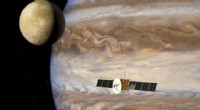
* Europa Clipper (2024): Investigating Jupiter's moon Europa, a potential site for life.
* Dragonfly (2026): A drone-like probe to explore Saturn's moon Titan.
These are just a few examples of the many space probes that have revolutionized our understanding of the cosmos. As technology continues to advance, we can expect even more groundbreaking discoveries in the future.