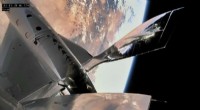
* No official boundary: There's no physical barrier or clear line in the atmosphere.
* Different definitions: Different organizations use different criteria:
* 100 kilometers (62 miles): This is the most common definition used by the Fédération Aéronautique Internationale (FAI), which is an international body that sets standards for air and space records.
* 80 kilometers (50 miles): The U.S. Air Force uses this altitude to define an astronaut.
* Kármán Line: Named after Theodore von Kármán, this altitude (around 100 km) is where an aircraft would need to travel faster than orbital velocity to generate enough lift to stay aloft.
So, while 100 kilometers is the most widely accepted "beginning of space", it's important to understand that it's a somewhat arbitrary definition.
Here's what happens as a rocket ascends:
* Lower atmosphere: The rocket experiences increasing air resistance and drag, causing it to heat up.
* Upper atmosphere (exosphere): The air becomes extremely thin, and the rocket starts to reach speeds high enough to be considered in "space."
* Space: At the defined "space" altitude, the rocket is above most of the atmosphere's density and experiences very little air resistance.
Ultimately, "entering space" is more about the rocket's trajectory and its ability to reach and maintain orbit than a specific altitude.