Types of Radiation:
* Solar Radiation: This includes high-energy particles emitted from the Sun, such as protons and electrons, which can be particularly intense during solar flares and coronal mass ejections.
* Galactic Cosmic Rays (GCRs): These are high-energy particles originating from distant sources outside our solar system. They are composed mainly of protons and heavier atomic nuclei, carrying much higher energies than solar radiation.
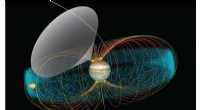
* Trapped Radiation Belts: These are regions around Earth where charged particles are trapped by the Earth's magnetic field. The Van Allen belts are the most prominent example, containing high doses of energetic protons and electrons.
Effects of Radiation:
* Acute Radiation Sickness: High doses of radiation can cause immediate symptoms such as nausea, vomiting, and fatigue.
* Long-Term Health Risks: Chronic exposure to radiation can increase the risk of developing cancer, cataracts, and other health problems.
* DNA Damage: Radiation can damage DNA, leading to mutations and cellular dysfunction.
* Spacecraft Damage: Radiation can damage electronic components, solar panels, and other spacecraft systems.
Specific Dangers:
* Deep Space Missions: Missions beyond the protective shield of Earth's magnetic field are exposed to much higher levels of GCRs, posing a significant health risk to astronauts.
* Solar Flares: Intense solar flares can deliver large doses of radiation within a short period, potentially causing acute radiation sickness.
* Lunar Missions: The Moon lacks a significant atmosphere or magnetic field, leaving astronauts exposed to both solar radiation and GCRs.
* Mars Missions: While Mars has a weak magnetic field, it is still susceptible to solar flares and GCRs, requiring advanced radiation shielding for long-duration missions.
Mitigation Strategies:
* Shielding: Using materials like lead, water, and plastic to absorb radiation.
* Radiation-Hardened Electronics: Designing electronic components to withstand radiation damage.
* Mission Planning: Optimizing mission routes and timing to minimize exposure to high radiation areas.
* Medical Countermeasures: Developing drugs and treatments to mitigate the effects of radiation.
Conclusion:
Radiation in outer space is a serious hazard that must be carefully considered for all space missions. Astronauts and spacecraft must be adequately protected to ensure the safety and success of future space exploration. Research and development of advanced shielding, radiation-hardened technologies, and medical countermeasures are crucial to mitigating these risks.