The Nebular Theory explains the formation of our solar system from a giant cloud of gas and dust. It goes through several stages:
1. Giant Molecular Cloud: The process begins with a giant cloud of gas and dust, primarily composed of hydrogen and helium, along with traces of heavier elements. This cloud is incredibly cold and dense, with gravity pulling its particles towards the center.
2. Collapse: As the cloud's particles coalesce, gravity intensifies, causing the cloud to collapse under its own weight. This collapse increases the cloud's density and temperature.
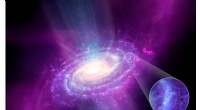
3. Rotating Disk: The cloud is not perfectly still, and even slight rotation during the collapse amplifies due to conservation of angular momentum. This creates a rotating disk of gas and dust, with a central bulge that is denser and hotter.
4. Protosun Formation: At the center of the disk, the dense, hot core of the cloud continues to collapse under gravity, eventually becoming hot enough to initiate nuclear fusion. This marks the birth of the protosun.
5. Planetesimal Formation: In the disk surrounding the protosun, particles of dust and gas collide and stick together due to electrostatic forces. This process continues, forming larger and larger aggregates called planetesimals.
6. Planetary Formation: Planetesimals grow through accretion, gathering more particles and colliding with each other. Eventually, they coalesce into larger, more stable bodies called planets. The type of planet that forms (rocky, gas giant, or ice giant) depends on the composition of the materials in the surrounding disk.
7. Clearing of the Disk: As the protosun continues to develop and the planets grow, the surrounding disk of material is gradually cleared away by solar wind, gravitational forces, and collisions.
8. Solar System Formation: The final result is a solar system with a central star (the Sun) surrounded by orbiting planets, moons, asteroids, and comets. The solar system continues to evolve as gravitational interactions shape its dynamics and the Sun ages.
Note: This is a simplified description of the nebular theory. The actual process involves many complex interactions and is still being studied by scientists.